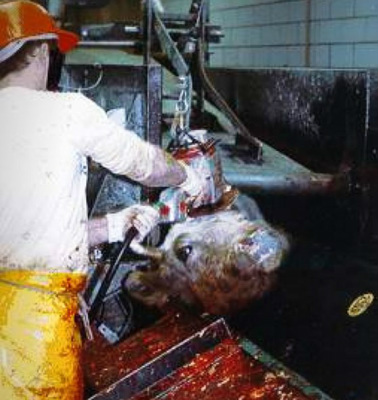
Meat is murder?
More like suicide!
"The beef industry has contributed to more American deaths than all the wars of this century, all natural disasters, and all automobile accidents combined. If beef is your idea of 'real food for real people' you'd better live real close to a real good hospital."
~ Neal Barnard ~
(American physician, author, clinical researcher, and founding president of the Physicians Committee for Responsible Medicine)
|

|
At one time science supported the consumption of meat. It no longer does. The facts are so overwhelming that the eating of animal flesh is doomed as the age of enlightenment is being ushered in. One day mankind will look back in horror at the carnivorous and murderous habits of its predecessors. The eating of animals and other living creatures will seem as barbaric and disgusting to future man as the eating of human meat now seems to the average American. Animal-eating is only one step below cannibalism. Consider these facts:
A Yale University study revealed that vegetarians have nearly twice the stamina of meat-eaters. Cornell University announced through major newspapers in May of 1990, “Humans are natural vegetarians.” The report said: “Animal foods, in general, are not really helpful and we need to get away from eating them.” “In addition to reducing the risk of heart disease, low cholesterol also protects against colon cancer, the most common life-threatening cancer among Americans.”
World starvation is well connected to meat-eating habits. If Americans stopped feeding grain to cattle, the excess grain could feed 500 million people (not to mention the land that could be used to grow food instead of being used for grazing cattle). When people see those programs on TV about all the starving children, they should consider that their diets are a contributing factor.
**Pasteurized milk, like meat, drains the body of alkaline and electrolyte minerals. Milk that has been cooked (pasteurized) takes more calcium to digest than it gives back!
Source
- In 1961, the “Journal of the American Medical Association” reported that a vegetarian diet could prevent 90-97% of heart diseases.
- Studies reveal 59% less cancer among people who eat small amounts of meat, compared to average meat-eaters. (Imagine how much better those figures would be when compared to vegetarians.)
- Scotland has the highest rate of bowel cancer in the world and they eat 20% more meat than the English.
- The kidneys of the meat-eater must work three times harder than the kidneys of the vegetarian.
- Although meat needs to pass through the digestive tract quickly, it takes four times longer than grains or vegetables.
- During World War I, Norway and Denmark could not get meat. The death rate dropped 17% and then returned to normal when they returned to their meat diets. The American National Institute of Health, in a study of 50,000 vegetarians, found that they live longer, have far less heart disease, and a much lower cancer rate compared to meat-eaters.
- In England, vegetarians pay less for life insurance. Studies show that vegetarians are stronger, more agile, have greater endurance, and recover from fatigue faster than meat-eaters.
A Yale University study revealed that vegetarians have nearly twice the stamina of meat-eaters. Cornell University announced through major newspapers in May of 1990, “Humans are natural vegetarians.” The report said: “Animal foods, in general, are not really helpful and we need to get away from eating them.” “In addition to reducing the risk of heart disease, low cholesterol also protects against colon cancer, the most common life-threatening cancer among Americans.”
World starvation is well connected to meat-eating habits. If Americans stopped feeding grain to cattle, the excess grain could feed 500 million people (not to mention the land that could be used to grow food instead of being used for grazing cattle). When people see those programs on TV about all the starving children, they should consider that their diets are a contributing factor.
**Pasteurized milk, like meat, drains the body of alkaline and electrolyte minerals. Milk that has been cooked (pasteurized) takes more calcium to digest than it gives back!
Source
Celebrated Cornell University professor T. Colin Campbell Phd, presents the overwhelming evidence showing that animal protein is one of the most potent carcinogens people are exposed to. Professor T. Colin Campbell discusses his decades of NIH-funded research which show that meat and dairy promote cancer growth and a plant-based (vegan) diet can prevent and even reverse cancer.
Meat consumption and cancer risk
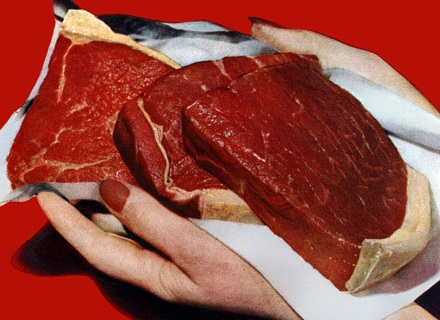
The World Health Organization has determined that dietary factors account for at least 30 percent of all cancers in Western countries and up to 20 percent in developing countries. When cancer researchers started to search for links between diet and cancer, one of the most noticeable findings was that people who avoided meat were much less likely to develop the disease. Large studies in England and Germany showed that vegetarians were about 40 percent less likely to develop cancer compared to meat eaters. In the United States, researchers studied Seventh-day Adventists, a religious group that is remarkable because, although nearly all members avoid tobacco and alcohol and follow generally healthful lifestyles, about half of the Adventist population is vegetarian, while the other half consumes modest amounts of meat. This fact allowed scientists to separate the effects of eating meat from other factors. Overall, these studies showed significant reductions in cancer risk among those who avoided meat. In contrast, Harvard studies showed that daily meat eaters have approximately three times the colon cancer risk, compared to those who rarely eat meat.
A number of hypotheses have been advanced to explain the connection between meat consumption and cancer risk. First, meat is devoid of fiber and other nutrients that have a protective effect. Meat also contains animal protein, saturated fat, and, in some cases, carcinogenic compounds such as heterocyclic amines (HCA) and polycyclic aromatic hydrocarbons (PAH) formed during the processing or cooking of meat. HCAs, formed as meat is cooked at high temperatures, and PAHs, formed during the burning of organic substances, are believed to increase cancer risk. In addition, the high fat content of meat and other animal products increases hormone production, thus increasing the risk of hormone-related cancers such as breast and prostate cancer.
In 2007, the American Institute for Cancer Research (AICR) published their second review of the major studies on food, nutrition, and cancer prevention. For cancers of the oesophagus, lung, pancreas, stomach, collorectum, endometrium, and prostate, it was determined that red meat (beef, pork, or lamb) and processed meat consumption possibly increased cancer risk. For colorectal cancer, a review of the literature determined that there is convincing scientific evidence that red meat increased cancer risk and that processed meat, saturated/animal fat, and heavily cooked meat were also convincing of increased risk.
Carcinogenic Compounds in Cooked Meat
Heterocyclic Amines
HCAs, a family of mutagenic compounds, are produced during the cooking process of many animal products, including chicken, beef, pork, and fish. Even meat that is cooked under normal grilling, frying, or oven-broiling may contain significant quantities of these mutagens.
The longer and hotter the meat is cooked, the more these compounds form. In some studies, grilled chicken has formed higher concentrations of these cancer-causing substances than other types of cooked meat.
The major classes of heterocyclic amines include amino-imidazo-quinolines, or amino-imidazo-quinoxalines (collectively called IQ-type compounds), and amino-imidazo-pyridines such as PhIP. IQ-type compounds and PhIP are formed from creatine or creatinine, specific amino acids, and sugars. All meats (including fish) are high in creatine, and HCA formation is greatest when cooking meat at high temperatures, as is most common with grilling or frying. Consumption of well-done meat and PhIP has been associated with increased risk of breast cancer and colon cancer, as discussed in greater detail below. A recent case-control study at the University of Utah that included 952 subjects with rectal cancer and 1205 controls found that men and women with the highest consumption of processed or well-cooked meat had an increased risk of rectal cancer.
Polycyclic Aromatic Hydrocarbons
Grilling or broiling meat over a direct flame results in fat dropping on the hot fire and the production of polycyclic aromatic hydrocarbon-containing flames. Polycyclic aromatic hydrocarbons (PAHs) adhere to the surface of food, and the more intense the heat, the more PAHs are present. They are widely believed to play a significant role in human cancers. A fairly consistent association between grilled or broiled, but not fried, meat consumption and stomach cancer implies that dietary exposure to PAHs may play a role in the development of stomach cancer in humans.
Breast Cancer
Countries with a higher intake of fat, especially fat from animal products, such as meat and dairy products, have a higher incidence of breast cancer. In Japan, for example, the traditional diet is much lower in fat, especially animal fat, than the typical western diet, and breast cancer rates are low. In the late 1940s, when breast cancer was particularly rare in Japan, less than 10 percent of the calories in the Japanese diet came from fat. The American diet is centered on animal products, which tend to be high in fat and low in other important nutrients, with 30 to 35 percent of calories coming from fat. When Japanese girls are raised on westernized diets, their rate of breast cancer increases dramatically. Even within Japan, affluent women who eat meat daily have an 8.5 times higher risk of breast cancer than poorer women who rarely or never eat meat. One of the proposed reasons is that fatty foods boost the hormones that promote cancer.
According to new findings from the Shanghai Women's Health Study, soy food intake provides protection against premenopausal breast cancer when consumed during adolescence and as an adult. The usual dietary intake of 73,223 Chinese women during adulthood and adolescence was assessed after a mean follow-up of 7.4 years. Those with the highest intake of soy protein or isoflavone versus those with the lowest had about half the risk of premenopausal breast cancer regardless of age at time of consumption. No significant association with soy foods was found for postmenopausal breast cancer.
The consumption of high-fat foods such as meat, dairy products, fried foods, and even vegetable oils causes a woman’s body to make more estrogens, which encourage cancer cell growth in the breast and other organs that are sensitive to female sex hormones. This suggests that, by avoiding fatty foods throughout life, hormone-related cancer risk decreases. A 2003 study, published in the Journal of the National Cancer Institute, found that when girls ages eight to ten reduced the amount of fat in their diet—even very slightly—their estrogen levels were held at a lower and safer level during the next several years. By increasing vegetables, fruits, grains, and beans, and reducing animal-derived foods, the amount of estradiol (a principal estrogen) in their blood dropped by 30 percent, compared to a group of girls who did not change their diets.
Harvard researchers recently conducted a prospective analysis of 90,655 premenopausal women, ages 26 to 46, enrolled in the Nurses’ Health Study II and determined that intake of animal fat, especially from red meat and high-fat dairy products, during premenopausal years is associated with an increased risk of breast cancer. Increased risk was not associated with vegetable fats.
In addition, researchers at the Ontario Cancer Institute conducted a meta-analysis of all the case-control and cohort studies published up to July 2003 that studied dietary fat, fat-containing foods, and breast cancer risk. Case-control and cohort study analyses yielded similar risk results, with a high total fat intake associated with increased breast cancer risk. Significant relative risks for meat and saturated fat intake also emerged, with high meat intake increasing cancer risk by 17 percent and high saturated fat intake increasing cancer risk by 19 percent.
Several studies show meat intake to be a breast cancer risk factor, even when confounding factors, such as total caloric intake and total fat intake, are controlled. Part of the reason may be that meat becomes a source of carcinogens and/or mutagens, such as HCAs, that are formed while cooking meat at high temperatures. A review of HCAs showed that certain HCAs are distributed to the mammary gland and that humans can activate HCAs metabolically. As a consequence, frequent meat consumption may be a risk factor for breast cancer.
Colorectal Cancer
As with breast cancer, frequent consumption of meat, particularly red meat, is associated with an increased risk of colon cancer. Total fat and saturated fat, which tend to be substantially higher in animal products than in plant-derived foods, and refined sugar, all heighten colon cancer risks. At Harvard University, researchers zeroed in on red meat, finding that individuals eating beef, pork, or lamb daily have approximately three times the colon cancer risk, compared to people who generally avoid these products. A review of 32 case-control and 13 cohort studies concluded that meat consumption is associated with an increase in colorectal cancer risk, with the association being more consistently found with red meat and processed meat. And, in the recently published Cancer Prevention Study II, involving 148,610 adults followed since 1982, the group with the highest red meat and processed meat intakes had approximately 30 to 40 percent and 50 percent higher colon cancer risk, respectively, compared to those with lower intakes. In this study, high red meat intake was defined as 3 ounces of beef, lamb, or pork for men and 2 ounces for women daily, the amount in a typical hamburger. High processed meat intake (ham, cold cuts, hot dogs, bacon, sausage) was defined as 1 ounce eaten 5 or 6 times a week for men, and 2 or 3 times a week for women—the amount in one slice of ham. In addition, earlier studies have also indicated that those consuming white meat, particularly chicken, have approximately a threefold higher colon cancer risk, compared to vegetarians.
Secondary bile acids are probably part of the problem. In order to absorb fat, the liver makes bile, which it stores in the gallbladder. After a meal, the gallbladder sends bile acids into the intestine, where they chemically modify the fats eaten so they can be absorbed. Unfortunately, bacteria in the intestine turn these bile acids into cancer-promoting substances called secondary bile acids. Meats not only contain a substantial amount of fat; they also foster the growth of bacteria that cause carcinogenic secondary bile acids to form.
Cooking methods that promote the formation of HCAs are believed to play a significant role in colorectal cancer risk. A case-control study in North Carolina that analyzed meat intake by level of doneness, cooking method, and estimated intake of HCAs in 620 colon cancer patients and 1038 controls, found that not only was red meat intake positively associated with colon cancer risk, but also pan-frying was the riskiest way to prepare meat due to high HCA formation. Confirmation of the link between frying and colorectal cancer risk was adduced in the review mentioned above, where high frying temperature was found to increase colon cancer risk almost twofold, and rectal cancer risk by 60 percent.
Colorectal cancer is steadily becoming more common among young adults, according to an American Cancer Society analysis. Incidence rates among adults ages 20 to 49 increased 1.5 percent per year in men and 1.6 percent per year in women from 1992 to 2005. The increase may be tied to rising rates of obesity, a major risk factor for colorectal cancer. Increased consumption of meat (especially in fast food) over the past three decades could also be a key factor. Previous studies have suggested that diets free of red and processed meats and rich in plant-based foods may significantly reduce colorectal cancer risk.
Prostate Cancer
Prostate cancer is one of the leading cancers among men in the U.S., and researchers have explored a number of possible dietary factors contributing to prostate cancer risk. These include dietary fat, saturated fat, dairy products, and meat, as well as dietary factors that may decrease risk, such as the consumption of carotenoids and other antioxidants, fiber, and fruit. As with breast cancer risk, a man’s intake of dietary fat, which is abundant in meat and other animal products, increases testosterone production, which in turn increases prostate cancer risk. One of the largest nested case-control studies, which showed a positive association between prostate cancer incidence and red meat consumption, was done at Harvard University in an analysis of almost 15,000 male physicians in the Physicians’ Health Study. Although this study primarily analyzed plasma fatty acids and prostate cancer risk, the authors found that men who consumed red meat at least five times per week had a relative risk of 2.5 for developing prostate cancer compared to men who ate red meat less than once per week. The most comprehensive dietary cohort study on diet and prostate cancer risk reported on nearly 52,000 health professionals in Harvard’s Health Professionals Follow-Up Study, which completed food frequency questionnaires in 1986. The report, based on 3 to 4 years of follow-up data, found a statistically significant relationship between higher red meat intake and the risk of prostate cancer, with red meat as the food group with the strongest positive association with advanced prostate cancer. These and other study findings suggest that reducing or eliminating meat from the diet reduces the risk of prostate cancer.
A new review published in the Journal of Human Nutrition and Dietetics assessed whether certain modifications in diet have a beneficial effect on the prevention of prostate cancer. Results suggest that a diet low in fat, red meat, dairy, and calcium, yet high in fruits and vegetables is beneficial in preventing and treating prostate cancer. Consumption of highly processed or charcoaled meats, dairy products, and fats seemed to be correlated with prostate cancer.
Other Cancers
Although not as extensively studied as breast, colon, and prostate cancer risk, a number of studies have concluded that meat consumption may play a significant role in kidney and pancreatic cancer risk. Three of eight case-control studies examining the relationship between renal cell carcinoma and meat consumption found a statistically significant increase in risk with a high consumption of meat. In addition, a prospective study in Japan found that people consuming meat daily had higher death rates from kidney cancer than those eating meat less frequently.
Red meat and high glycemic index foods could be risk factors for kidney cancer, according to a 2009 study in the Journal of the American Dietetic Association. Researchers studied food questionnaires for 335 people with renal cell carcinoma, the most common form of kidney cancer, and 337 healthy controls. They found that men and women who ate red meat five or more times a week were more than four times as likely to develop the disease, compared to those who consumed red meat less than once a week. The study also found that white bread, white potatoes, and other high glycemic index foods increased the cancer risk threefold. High glycemic index foods affect insulin-like growth factors, which impact tumor development.
Pancreatic cancer is relatively uncommon, yet it is frequently fatal, with fewer than 20 percent of cases surviving for one full year. Daily meat intake has been shown to be associated with increased pancreatic cancer risk in a number of prospective, cohort, and case-control studies. Some of these studies have singled out beef and pork consumption and have concluded there is a higher risk for pancreatic cancer with a higher intake of these foods.
According to a new study, fat from red meat and dairy products is associated with increased risk of pancreatic cancer. As part of the National Institutes of Health-AARP Diet and Health Study, researchers followed and analyzed the diets of more than 525,000 participants to determine whether there is an association between dietary fat and pancreatic cancer. This same study found no association between plant-food fat and pancreatic cancer.
A recent study in the British Journal of Cancer found that vegetarians are 12 percent less likely to develop cancer than meat-eaters.
After following 61,000 meat-eaters and vegetarians for over 12 years, researchers also discovered that cancers of the blood—such as leukemia, multiple myeloma, and non-Hodgkin lymphoma—were drastically reduced by as much as 45 percent for those following a vegetarian diet. Although this study points to an overall reduced risk, this may well be an underestimate of the benefit of a vegetarian diet. Previous studies have shown as much as a 40 percent reduced risk for all cancers.
Conclusion
Two themes consistently emerge from studies of cancer from many sites: vegetables and fruits help to reduce risk, while meat, animal products, and other fatty foods are frequently found to increase risk. Consumption of dietary fat drives production of hormones, which, in turn, promotes growth of cancer cells in hormone-sensitive organs such as the breast and prostate. Meat is devoid of the protective effects of fiber, antioxidants, phytochemicals, and other helpful nutrients, and it contains high concentrations of saturated fat and potentially carcinogenic compounds, which may increase one’s risk of developing many different kinds of cancer.
Vegetarian diets and diets rich in high-fiber plant foods such as whole grains, legumes, vegetables, and fruits offer a measure of protection. Fiber greatly speeds the passage of food through the colon, effectively removing carcinogens, and fiber actually changes the type of bacteria that is present in the intestine, so there is reduced production of carcinogenic secondary bile acids. Plant foods are also naturally low in fat and rich in antioxidants and other anti-cancer compounds. Not surprisingly, vegetarians are at the lowest risk for cancer and have a significantly reduced risk compared to meat-eaters.
Source & references
A number of hypotheses have been advanced to explain the connection between meat consumption and cancer risk. First, meat is devoid of fiber and other nutrients that have a protective effect. Meat also contains animal protein, saturated fat, and, in some cases, carcinogenic compounds such as heterocyclic amines (HCA) and polycyclic aromatic hydrocarbons (PAH) formed during the processing or cooking of meat. HCAs, formed as meat is cooked at high temperatures, and PAHs, formed during the burning of organic substances, are believed to increase cancer risk. In addition, the high fat content of meat and other animal products increases hormone production, thus increasing the risk of hormone-related cancers such as breast and prostate cancer.
In 2007, the American Institute for Cancer Research (AICR) published their second review of the major studies on food, nutrition, and cancer prevention. For cancers of the oesophagus, lung, pancreas, stomach, collorectum, endometrium, and prostate, it was determined that red meat (beef, pork, or lamb) and processed meat consumption possibly increased cancer risk. For colorectal cancer, a review of the literature determined that there is convincing scientific evidence that red meat increased cancer risk and that processed meat, saturated/animal fat, and heavily cooked meat were also convincing of increased risk.
Carcinogenic Compounds in Cooked Meat
Heterocyclic Amines
HCAs, a family of mutagenic compounds, are produced during the cooking process of many animal products, including chicken, beef, pork, and fish. Even meat that is cooked under normal grilling, frying, or oven-broiling may contain significant quantities of these mutagens.
The longer and hotter the meat is cooked, the more these compounds form. In some studies, grilled chicken has formed higher concentrations of these cancer-causing substances than other types of cooked meat.
The major classes of heterocyclic amines include amino-imidazo-quinolines, or amino-imidazo-quinoxalines (collectively called IQ-type compounds), and amino-imidazo-pyridines such as PhIP. IQ-type compounds and PhIP are formed from creatine or creatinine, specific amino acids, and sugars. All meats (including fish) are high in creatine, and HCA formation is greatest when cooking meat at high temperatures, as is most common with grilling or frying. Consumption of well-done meat and PhIP has been associated with increased risk of breast cancer and colon cancer, as discussed in greater detail below. A recent case-control study at the University of Utah that included 952 subjects with rectal cancer and 1205 controls found that men and women with the highest consumption of processed or well-cooked meat had an increased risk of rectal cancer.
Polycyclic Aromatic Hydrocarbons
Grilling or broiling meat over a direct flame results in fat dropping on the hot fire and the production of polycyclic aromatic hydrocarbon-containing flames. Polycyclic aromatic hydrocarbons (PAHs) adhere to the surface of food, and the more intense the heat, the more PAHs are present. They are widely believed to play a significant role in human cancers. A fairly consistent association between grilled or broiled, but not fried, meat consumption and stomach cancer implies that dietary exposure to PAHs may play a role in the development of stomach cancer in humans.
Breast Cancer
Countries with a higher intake of fat, especially fat from animal products, such as meat and dairy products, have a higher incidence of breast cancer. In Japan, for example, the traditional diet is much lower in fat, especially animal fat, than the typical western diet, and breast cancer rates are low. In the late 1940s, when breast cancer was particularly rare in Japan, less than 10 percent of the calories in the Japanese diet came from fat. The American diet is centered on animal products, which tend to be high in fat and low in other important nutrients, with 30 to 35 percent of calories coming from fat. When Japanese girls are raised on westernized diets, their rate of breast cancer increases dramatically. Even within Japan, affluent women who eat meat daily have an 8.5 times higher risk of breast cancer than poorer women who rarely or never eat meat. One of the proposed reasons is that fatty foods boost the hormones that promote cancer.
According to new findings from the Shanghai Women's Health Study, soy food intake provides protection against premenopausal breast cancer when consumed during adolescence and as an adult. The usual dietary intake of 73,223 Chinese women during adulthood and adolescence was assessed after a mean follow-up of 7.4 years. Those with the highest intake of soy protein or isoflavone versus those with the lowest had about half the risk of premenopausal breast cancer regardless of age at time of consumption. No significant association with soy foods was found for postmenopausal breast cancer.
The consumption of high-fat foods such as meat, dairy products, fried foods, and even vegetable oils causes a woman’s body to make more estrogens, which encourage cancer cell growth in the breast and other organs that are sensitive to female sex hormones. This suggests that, by avoiding fatty foods throughout life, hormone-related cancer risk decreases. A 2003 study, published in the Journal of the National Cancer Institute, found that when girls ages eight to ten reduced the amount of fat in their diet—even very slightly—their estrogen levels were held at a lower and safer level during the next several years. By increasing vegetables, fruits, grains, and beans, and reducing animal-derived foods, the amount of estradiol (a principal estrogen) in their blood dropped by 30 percent, compared to a group of girls who did not change their diets.
Harvard researchers recently conducted a prospective analysis of 90,655 premenopausal women, ages 26 to 46, enrolled in the Nurses’ Health Study II and determined that intake of animal fat, especially from red meat and high-fat dairy products, during premenopausal years is associated with an increased risk of breast cancer. Increased risk was not associated with vegetable fats.
In addition, researchers at the Ontario Cancer Institute conducted a meta-analysis of all the case-control and cohort studies published up to July 2003 that studied dietary fat, fat-containing foods, and breast cancer risk. Case-control and cohort study analyses yielded similar risk results, with a high total fat intake associated with increased breast cancer risk. Significant relative risks for meat and saturated fat intake also emerged, with high meat intake increasing cancer risk by 17 percent and high saturated fat intake increasing cancer risk by 19 percent.
Several studies show meat intake to be a breast cancer risk factor, even when confounding factors, such as total caloric intake and total fat intake, are controlled. Part of the reason may be that meat becomes a source of carcinogens and/or mutagens, such as HCAs, that are formed while cooking meat at high temperatures. A review of HCAs showed that certain HCAs are distributed to the mammary gland and that humans can activate HCAs metabolically. As a consequence, frequent meat consumption may be a risk factor for breast cancer.
Colorectal Cancer
As with breast cancer, frequent consumption of meat, particularly red meat, is associated with an increased risk of colon cancer. Total fat and saturated fat, which tend to be substantially higher in animal products than in plant-derived foods, and refined sugar, all heighten colon cancer risks. At Harvard University, researchers zeroed in on red meat, finding that individuals eating beef, pork, or lamb daily have approximately three times the colon cancer risk, compared to people who generally avoid these products. A review of 32 case-control and 13 cohort studies concluded that meat consumption is associated with an increase in colorectal cancer risk, with the association being more consistently found with red meat and processed meat. And, in the recently published Cancer Prevention Study II, involving 148,610 adults followed since 1982, the group with the highest red meat and processed meat intakes had approximately 30 to 40 percent and 50 percent higher colon cancer risk, respectively, compared to those with lower intakes. In this study, high red meat intake was defined as 3 ounces of beef, lamb, or pork for men and 2 ounces for women daily, the amount in a typical hamburger. High processed meat intake (ham, cold cuts, hot dogs, bacon, sausage) was defined as 1 ounce eaten 5 or 6 times a week for men, and 2 or 3 times a week for women—the amount in one slice of ham. In addition, earlier studies have also indicated that those consuming white meat, particularly chicken, have approximately a threefold higher colon cancer risk, compared to vegetarians.
Secondary bile acids are probably part of the problem. In order to absorb fat, the liver makes bile, which it stores in the gallbladder. After a meal, the gallbladder sends bile acids into the intestine, where they chemically modify the fats eaten so they can be absorbed. Unfortunately, bacteria in the intestine turn these bile acids into cancer-promoting substances called secondary bile acids. Meats not only contain a substantial amount of fat; they also foster the growth of bacteria that cause carcinogenic secondary bile acids to form.
Cooking methods that promote the formation of HCAs are believed to play a significant role in colorectal cancer risk. A case-control study in North Carolina that analyzed meat intake by level of doneness, cooking method, and estimated intake of HCAs in 620 colon cancer patients and 1038 controls, found that not only was red meat intake positively associated with colon cancer risk, but also pan-frying was the riskiest way to prepare meat due to high HCA formation. Confirmation of the link between frying and colorectal cancer risk was adduced in the review mentioned above, where high frying temperature was found to increase colon cancer risk almost twofold, and rectal cancer risk by 60 percent.
Colorectal cancer is steadily becoming more common among young adults, according to an American Cancer Society analysis. Incidence rates among adults ages 20 to 49 increased 1.5 percent per year in men and 1.6 percent per year in women from 1992 to 2005. The increase may be tied to rising rates of obesity, a major risk factor for colorectal cancer. Increased consumption of meat (especially in fast food) over the past three decades could also be a key factor. Previous studies have suggested that diets free of red and processed meats and rich in plant-based foods may significantly reduce colorectal cancer risk.
Prostate Cancer
Prostate cancer is one of the leading cancers among men in the U.S., and researchers have explored a number of possible dietary factors contributing to prostate cancer risk. These include dietary fat, saturated fat, dairy products, and meat, as well as dietary factors that may decrease risk, such as the consumption of carotenoids and other antioxidants, fiber, and fruit. As with breast cancer risk, a man’s intake of dietary fat, which is abundant in meat and other animal products, increases testosterone production, which in turn increases prostate cancer risk. One of the largest nested case-control studies, which showed a positive association between prostate cancer incidence and red meat consumption, was done at Harvard University in an analysis of almost 15,000 male physicians in the Physicians’ Health Study. Although this study primarily analyzed plasma fatty acids and prostate cancer risk, the authors found that men who consumed red meat at least five times per week had a relative risk of 2.5 for developing prostate cancer compared to men who ate red meat less than once per week. The most comprehensive dietary cohort study on diet and prostate cancer risk reported on nearly 52,000 health professionals in Harvard’s Health Professionals Follow-Up Study, which completed food frequency questionnaires in 1986. The report, based on 3 to 4 years of follow-up data, found a statistically significant relationship between higher red meat intake and the risk of prostate cancer, with red meat as the food group with the strongest positive association with advanced prostate cancer. These and other study findings suggest that reducing or eliminating meat from the diet reduces the risk of prostate cancer.
A new review published in the Journal of Human Nutrition and Dietetics assessed whether certain modifications in diet have a beneficial effect on the prevention of prostate cancer. Results suggest that a diet low in fat, red meat, dairy, and calcium, yet high in fruits and vegetables is beneficial in preventing and treating prostate cancer. Consumption of highly processed or charcoaled meats, dairy products, and fats seemed to be correlated with prostate cancer.
Other Cancers
Although not as extensively studied as breast, colon, and prostate cancer risk, a number of studies have concluded that meat consumption may play a significant role in kidney and pancreatic cancer risk. Three of eight case-control studies examining the relationship between renal cell carcinoma and meat consumption found a statistically significant increase in risk with a high consumption of meat. In addition, a prospective study in Japan found that people consuming meat daily had higher death rates from kidney cancer than those eating meat less frequently.
Red meat and high glycemic index foods could be risk factors for kidney cancer, according to a 2009 study in the Journal of the American Dietetic Association. Researchers studied food questionnaires for 335 people with renal cell carcinoma, the most common form of kidney cancer, and 337 healthy controls. They found that men and women who ate red meat five or more times a week were more than four times as likely to develop the disease, compared to those who consumed red meat less than once a week. The study also found that white bread, white potatoes, and other high glycemic index foods increased the cancer risk threefold. High glycemic index foods affect insulin-like growth factors, which impact tumor development.
Pancreatic cancer is relatively uncommon, yet it is frequently fatal, with fewer than 20 percent of cases surviving for one full year. Daily meat intake has been shown to be associated with increased pancreatic cancer risk in a number of prospective, cohort, and case-control studies. Some of these studies have singled out beef and pork consumption and have concluded there is a higher risk for pancreatic cancer with a higher intake of these foods.
According to a new study, fat from red meat and dairy products is associated with increased risk of pancreatic cancer. As part of the National Institutes of Health-AARP Diet and Health Study, researchers followed and analyzed the diets of more than 525,000 participants to determine whether there is an association between dietary fat and pancreatic cancer. This same study found no association between plant-food fat and pancreatic cancer.
A recent study in the British Journal of Cancer found that vegetarians are 12 percent less likely to develop cancer than meat-eaters.
After following 61,000 meat-eaters and vegetarians for over 12 years, researchers also discovered that cancers of the blood—such as leukemia, multiple myeloma, and non-Hodgkin lymphoma—were drastically reduced by as much as 45 percent for those following a vegetarian diet. Although this study points to an overall reduced risk, this may well be an underestimate of the benefit of a vegetarian diet. Previous studies have shown as much as a 40 percent reduced risk for all cancers.
Conclusion
Two themes consistently emerge from studies of cancer from many sites: vegetables and fruits help to reduce risk, while meat, animal products, and other fatty foods are frequently found to increase risk. Consumption of dietary fat drives production of hormones, which, in turn, promotes growth of cancer cells in hormone-sensitive organs such as the breast and prostate. Meat is devoid of the protective effects of fiber, antioxidants, phytochemicals, and other helpful nutrients, and it contains high concentrations of saturated fat and potentially carcinogenic compounds, which may increase one’s risk of developing many different kinds of cancer.
Vegetarian diets and diets rich in high-fiber plant foods such as whole grains, legumes, vegetables, and fruits offer a measure of protection. Fiber greatly speeds the passage of food through the colon, effectively removing carcinogens, and fiber actually changes the type of bacteria that is present in the intestine, so there is reduced production of carcinogenic secondary bile acids. Plant foods are also naturally low in fat and rich in antioxidants and other anti-cancer compounds. Not surprisingly, vegetarians are at the lowest risk for cancer and have a significantly reduced risk compared to meat-eaters.
Source & references
Processed meats declared too dangerous
for human consumption
By Mike Adams - December 2007
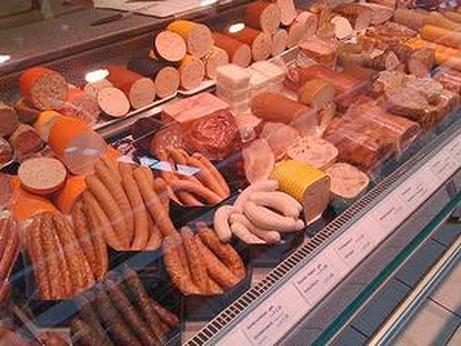
The World Cancer Research Fund (WCRF) has just completed a detailed review of more than 7,000 clinical studies covering links between diet and cancer. Its conclusion is rocking the health world with startling bluntness: Processed meats are too dangerous for human consumption. Consumers should stop buying and eating all processed meat products for the rest of their lives.
Processed meats include bacon, sausage, hot dogs, sandwich meat, packaged ham, pepperoni, salami and virtually all red meat used in frozen prepared meals. They are usually manufactured with a carcinogenic ingredient known as sodium nitrite. This is used as a color fixer by meat companies to turn packaged meats a bright red color so they look fresh. Unfortunately, sodium nitrite also results in the formation of cancer-causing nitrosamines in the human body. And this leads to a sharp increase in cancer risk for those who eat them.
A 2005 University of Hawaii study found that processed meats increase the risk of pancreatic cancer by 67 percent. Another study revealed that every 50 grams of processed meat consumed daily increases the risk of colorectal cancer by 50 percent. These are alarming numbers. Note that these cancer risks do not come from eating fresh, non-processed meats. They only appear in people who regularly consume processed meat products containing sodium nitrite.
Sodium nitrite appears predominantly in red meat products (you won’t find it in chicken or fish products). Here’s a short list of food items to check carefully for sodium nitrite and monosodium glutamate (MSG), another dangerous additive:
If sodium nitrite is so dangerous to humans, why do the FDA and USDA continue to allow this cancer-causing chemical to be used? The answer, of course, is that food industry interests now dominate the actions by U.S. government regulators. The USDA, for example, tried to ban sodium nitrite in the late 1970’s but was overridden by the meat industry. It insisted the chemical was safe and accused the USDA of trying to “ban bacon.” Today, the corporations that dominate American food and agricultural interests hold tremendous influence over the FDA and USDA. Consumers are offered no real protection from dangerous chemicals intentionally added to foods, medicines and personal care products.
You can protect yourself and your family from the dangers of processed meats by following a few simple rules:
And finally, eat more fresh produce with every meal. There is evidence that natural vitamin C found in citrus fruits and exotic berries (like camu camu) helps prevent the formation of cancer-causing nitrosamines, protecting you from the devastating health effects of sodium nitrite in processed meats. The best defense, of course, is to avoid eating processed meats altogether.
Ed. Note: Mike Adams, the Health Ranger - a leading authority on healthy living -- is on a mission: to explore, uncover and share the truth about harmful foods and beverages, prescription drugs, medical practices and the dishonest marketing practices that drive these industries. For his latest findings, click here.
Source
The World Cancer Research Fund (WCRF) has just completed a detailed review of more than 7,000 clinical studies covering links between diet and cancer. Its conclusion is rocking the health world with startling bluntness: Processed meats are too dangerous for human consumption. Consumers should stop buying and eating all processed meat products for the rest of their lives.
Processed meats include bacon, sausage, hot dogs, sandwich meat, packaged ham, pepperoni, salami and virtually all red meat used in frozen prepared meals. They are usually manufactured with a carcinogenic ingredient known as sodium nitrite. This is used as a color fixer by meat companies to turn packaged meats a bright red color so they look fresh. Unfortunately, sodium nitrite also results in the formation of cancer-causing nitrosamines in the human body. And this leads to a sharp increase in cancer risk for those who eat them.
A 2005 University of Hawaii study found that processed meats increase the risk of pancreatic cancer by 67 percent. Another study revealed that every 50 grams of processed meat consumed daily increases the risk of colorectal cancer by 50 percent. These are alarming numbers. Note that these cancer risks do not come from eating fresh, non-processed meats. They only appear in people who regularly consume processed meat products containing sodium nitrite.
Sodium nitrite appears predominantly in red meat products (you won’t find it in chicken or fish products). Here’s a short list of food items to check carefully for sodium nitrite and monosodium glutamate (MSG), another dangerous additive:
- Beef jerky
- Bacon
- Sausage
- Hot dogs
- Sandwich meat
- Frozen pizza with meat
- Canned soups with meat
- Frozen meals with meat
- Ravioli and meat pasta foods
- Kid’s meals containing red meat
- Sandwich meat used at popular restaurants
- Nearly all red meats sold at public schools, restaurants, hospitals, hotels and theme parks
If sodium nitrite is so dangerous to humans, why do the FDA and USDA continue to allow this cancer-causing chemical to be used? The answer, of course, is that food industry interests now dominate the actions by U.S. government regulators. The USDA, for example, tried to ban sodium nitrite in the late 1970’s but was overridden by the meat industry. It insisted the chemical was safe and accused the USDA of trying to “ban bacon.” Today, the corporations that dominate American food and agricultural interests hold tremendous influence over the FDA and USDA. Consumers are offered no real protection from dangerous chemicals intentionally added to foods, medicines and personal care products.
You can protect yourself and your family from the dangers of processed meats by following a few simple rules:
- Always read ingredient labels.
- Don’t buy anything made with sodium nitrite or monosodium glutamate.
- Don’t eat red meats served by restaurants, schools, hospitals, hotels or other institutions.
And finally, eat more fresh produce with every meal. There is evidence that natural vitamin C found in citrus fruits and exotic berries (like camu camu) helps prevent the formation of cancer-causing nitrosamines, protecting you from the devastating health effects of sodium nitrite in processed meats. The best defense, of course, is to avoid eating processed meats altogether.
Ed. Note: Mike Adams, the Health Ranger - a leading authority on healthy living -- is on a mission: to explore, uncover and share the truth about harmful foods and beverages, prescription drugs, medical practices and the dishonest marketing practices that drive these industries. For his latest findings, click here.
Source
Please read also the related article published in Natural News
All red meat is bad for you, new study says
A long-term study finds that eating any amount and any type increases the risk of premature death.
By Eryn Brown, Los Angeles Times
March 12, 2012, 4:28 p.m.
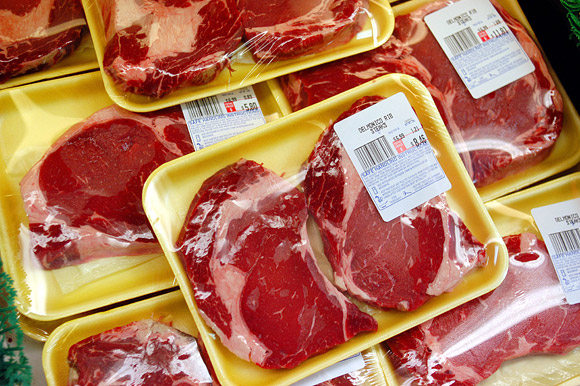
Eating red meat — any amount and any type — appears to significantly increase the risk of premature death, according to a long-range study that examined the eating habits and health of more than 110,000 adults for more than 20 years.
For instance, adding just one 3-ounce serving of unprocessed red meat — picture a piece of steak no bigger than a deck of cards — to one's daily diet was associated with a 13% greater chance of dying during the course of the study.
Even worse, adding an extra daily serving of processed red meat, such as a hot dog or two slices of bacon, was linked to a 20% higher risk of death during the study.
"Any red meat you eat contributes to the risk," said An Pan, a postdoctoral fellow at the Harvard School of Public Health in Boston and lead author of the study, published online Monday in the Archives of Internal Medicine.
Crunching data from thousands of questionnaires that asked people how frequently they ate a variety of foods, the researchers also discovered that replacing red meat with other foods seemed to reduce mortality risk for study participants.
Eating a serving of nuts instead of beef or pork was associated with a 19% lower risk of dying during the study. The team said choosing poultry or whole grains as a substitute was linked with a 14% reduction in mortality risk; low-fat dairy or legumes, 10%; and fish, 7%.
Previous studies had associated red meat consumption with diabetes, heart disease and cancer, all of which can be fatal. Scientists aren't sure exactly what makes red meat so dangerous, but the suspects include the iron and saturated fat in beef, pork and lamb, the nitrates used to preserve them, and the chemicals created by high-temperature cooking.
The Harvard researchers hypothesized that eating red meat would also be linked to an overall risk of death from any cause, Pan said. And the results suggest they were right: Among the 37,698 men and 83,644 women who were tracked, as meat consumption increased, so did mortality risk.
In separate analyses of processed and unprocessed meats, the group found that both types appear to hasten death. Pan said that at the outset, he and his colleagues had thought it likely that only processed meat posed a health danger.
Carol Koprowski, a professor of preventive medicine at USC's Keck School of Medicine who wasn't involved in the research, cautioned that it can be hard to draw specific conclusions from a study like this because there can be a lot of error in the way diet information is recorded in food frequency questionnaires, which ask subjects to remember past meals in sometimes grueling detail.
But Pan said the bottom line was that there was no amount of red meat that's good for you.
"If you want to eat red meat, eat the unprocessed products, and reduce it to two or three servings a week," he said. "That would have a huge impact on public health."
A majority of people in the study reported that they ate an average of at least one serving of meat per day.
Pan said that he eats one or two servings of red meat per week, and that he doesn't eat bacon or other processed meats.
Cancer researcher Lawrence H. Kushi of the Kaiser Permanente Division of Research in Oakland said that groups putting together dietary guidelines were likely to pay attention to the findings in the study.
"There's a pretty strong supposition that eating red meat is important — that it should be part of a healthful diet," said Kushi, who was not involved in the study. "These data basically demonstrate that the less you eat, the better."
UC San Francisco researcher and vegetarian diet advocate Dr. Dean Ornish said he gleaned a hopeful message from the study.
"Something as simple as a meatless Monday can help," he said. "Even small changes can make a difference."
Additionally, Ornish said, "What's good for you is also good for the planet."
In an editorial that accompanied the study, Ornish wrote that a plant-based diet could help cut annual healthcare costs from chronic diseases in the U.S., which exceed $1 trillion. Shrinking the livestock industry could also reduce greenhouse gas emissions and halt the destruction of forests to create pastures, he wrote.

By going vegan, you would avoid ingesting the feces, vomit, and bacteria such as the dangerous E.coli-bacterium that contaminates much meat.
E. coli resides in animals' intestinal tracts and ends up in meat when - and there's no nice way to put this - their guts are ripped open during slaughter and their feces spill out onto their flesh, contaminating it.
E. coli resides in animals' intestinal tracts and ends up in meat when - and there's no nice way to put this - their guts are ripped open during slaughter and their feces spill out onto their flesh, contaminating it.
Forks over knives
The feature film Forks Over Knives examines the profound claim that most, if not all, of the degenerative diseases that afflict us can be controlled, or even reversed, by rejecting our present menu of animal-based and processed foods.
The benefits of a vegetarian diet
The connection between diet and cancer is hardly a new one. But some truly eye-opening and life-changing research is taking that idea to a whole new level.
Basically the idea is this: cancer (and a slew of other diseases) are linked in an important way: they all involve excessive or otherwise defective angiogenesis (the process of forming new blood vessels).
Thus, "curing" or preventing a number of these diseases--including many cancers--may require little more than "correcting" or controlling angiogenesis, something that has been accomplished not only through synthetic drugs, but also by including specific foods in our normal diets (note also the connection with the discussion of "antioxidant" foods).
Listen to pioneer researcher in this field William Li as he lays out the theory and some of its implications - all in about 20 minutes!
Basically the idea is this: cancer (and a slew of other diseases) are linked in an important way: they all involve excessive or otherwise defective angiogenesis (the process of forming new blood vessels).
Thus, "curing" or preventing a number of these diseases--including many cancers--may require little more than "correcting" or controlling angiogenesis, something that has been accomplished not only through synthetic drugs, but also by including specific foods in our normal diets (note also the connection with the discussion of "antioxidant" foods).
Listen to pioneer researcher in this field William Li as he lays out the theory and some of its implications - all in about 20 minutes!
Anti-Angiogenic foods - eat to help fight cancer
On the Dr. Oz show Dr. Li stated:
“Food is a medicine that we take three times a day“
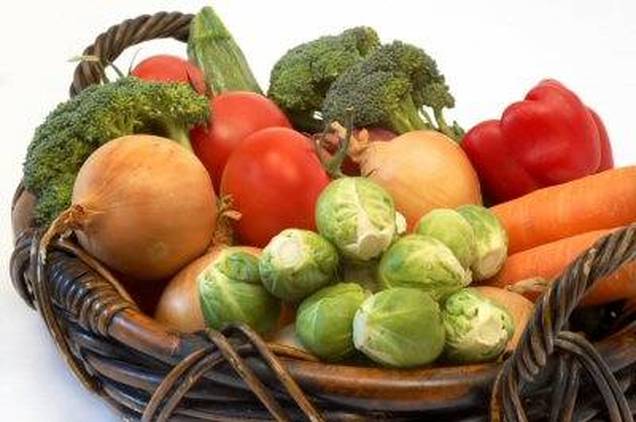
The best way to defeat cancer is by eating healthy and adding a few anti-angiogenic foods to your meals daily.
According to Dr. Li, there are 7 things everyone should consider implementing in making choices of foods that can lower your chances of having a disease.
Be picky - Make choices based on the quality of foods rather than the fact that it tastes good. For example why not purchase a Red Delicious apple that has twice as many cancer fighters as a Golden Delicious apple. Or buy San Marzano tomatoes because they have the most cancer fighting ingredients than any others. By having the knowledge that wine grapes grown in cooler climates have the most cancer fighters then you can make wine selections that will provide an added boost to your health lifestyle.
Chew Greens - Then cancer-fighting molecules are found within the leaves of greens; one must chew the leafy greens to help release enzymes to activate these molecules. Juicing the Bok Choy as I have done in the past may be somewhat beneficial, however chewing is so much better.
Choose a cancer-fighting food for each meal. If an individual has 3 meals a day will add up to be over a thousand cancer-fighting choices each year. Just think how much better this should make you feel.
Cook Vegetables – Cooking tomatoes in olive oil is better for you than having raw tomatoes.
“Do” Soy - Fermented soy (used in miso soup) contains four times more cancer fighters than regular soybeans.
Dunk Teabags - In order to get the cancer-fighting molecules to start working within the green tea, it is important to dunk the tea bag up and down within the cup rather than just letting it sit in the cup
Eat Sprouts – Broccoli sprouts have more cancer-fighting properties than regular broccoli.
To learn more please visit:http://moneyglitch.hubpages.com/hub/Anti-Angiogenic-Foods-Eat-to-Help-Fight-Cancer
According to Dr. Li, there are 7 things everyone should consider implementing in making choices of foods that can lower your chances of having a disease.
Be picky - Make choices based on the quality of foods rather than the fact that it tastes good. For example why not purchase a Red Delicious apple that has twice as many cancer fighters as a Golden Delicious apple. Or buy San Marzano tomatoes because they have the most cancer fighting ingredients than any others. By having the knowledge that wine grapes grown in cooler climates have the most cancer fighters then you can make wine selections that will provide an added boost to your health lifestyle.
Chew Greens - Then cancer-fighting molecules are found within the leaves of greens; one must chew the leafy greens to help release enzymes to activate these molecules. Juicing the Bok Choy as I have done in the past may be somewhat beneficial, however chewing is so much better.
Choose a cancer-fighting food for each meal. If an individual has 3 meals a day will add up to be over a thousand cancer-fighting choices each year. Just think how much better this should make you feel.
Cook Vegetables – Cooking tomatoes in olive oil is better for you than having raw tomatoes.
“Do” Soy - Fermented soy (used in miso soup) contains four times more cancer fighters than regular soybeans.
Dunk Teabags - In order to get the cancer-fighting molecules to start working within the green tea, it is important to dunk the tea bag up and down within the cup rather than just letting it sit in the cup
Eat Sprouts – Broccoli sprouts have more cancer-fighting properties than regular broccoli.
To learn more please visit:http://moneyglitch.hubpages.com/hub/Anti-Angiogenic-Foods-Eat-to-Help-Fight-Cancer

Disease has been escalating over the last 50 years resulting in 1 in 2 men and 1 in 3 women being diagnosed with cancer.
Every person today has been touched or will be touched by the loss of a loved one to illness and premature death.
In a time when modern medicine and science have made such enormous advancements, why is this so?
Why are you three times more likely to die of colon cancer if you eat meat?
Why don't our medical schools teach doctors about nutrition?
The following documentary "A delicate balance" will leave you fully informed as to some of the causes of chronic diseases and offers ways of improving human health.
To watch the full movie, please follow this link: http://adelicatebalance.com.au/watch-now.html
Every person today has been touched or will be touched by the loss of a loved one to illness and premature death.
In a time when modern medicine and science have made such enormous advancements, why is this so?
Why are you three times more likely to die of colon cancer if you eat meat?
Why don't our medical schools teach doctors about nutrition?
The following documentary "A delicate balance" will leave you fully informed as to some of the causes of chronic diseases and offers ways of improving human health.
To watch the full movie, please follow this link: http://adelicatebalance.com.au/watch-now.html
The eminent geologist who says her
'Plant Programme' may combat cancer
By Judith Potts - The Telegraph
Professor Jane Plant is an eminent geologist. In 1987, aged 42, and with two young children, she was diagnosed with breast cancer for the first time. Five years later the cancer returned four times – and, as she explains in her book Your Life in Your Hands, this was “despite a radical mastectomy, three further operations, 35 radiotherapy treatments, several chemotherapy treatments and irradiation of my ovaries to induce the menopause”. The doctors gave her three months to live.
Last week I met Jane and she explained to me – in very unscientific terms – how it is that she has been cancer-free since 1992. At the time she discovered the last cancerous lump in her neck, colleagues in China – where she had worked – happened to send her an atlas detailing the different cancers found across that country. Looking at it, she realised that breast cancer (and prostate cancer) were virtually unknown throughout China at that time – one death in 100,000 women, as opposed to one in 10 in some western countries. Why should that be?
The answer had to be found in the diet of the Chinese – no dairy food. Her diet became totally dairy-free but full of food containing cancer protective ingredients; she was careful to reduce her intake of hormones and chemicals from food; and altogether changed her lifestyle.
The large cancerous lump in her neck disappeared within five weeks andno cancer has ever returned.
Her “day-job” as a scientist gave her the ability to research the components of the food we eat, particularly discovering that milk proteins find their way into a good many products; to analyse the nutrients required to help the body withstand treatment and stay cancer-free; to understand the effects of chemicals used in food processing etc, etc. Hence, the Plant Programme (www.JanePlant.com) was born and, using it alongside conventional medicine, Jane has helped innumerable women and men to combat breast and prostate cancers – often not just stopping the cancer but reversing the disease’s path into secondaries and preventing it from returning.
Her book Eating for Better Health has just been published and the information about food, the scientific evidence to support it, and the case studies in Your Life in Your Hands make compelling reading. Rather than using the word “cancer”, Jane prefers the description “cells behaving badly”. I would agree with her. The word “cancer” definitely carries the connotation of pain and death and is, therefore, a terrifying word.
One fascinating fact is that Jane is not the least bit surprised that Megrahi – the Libyan bomber recently returned to his country because he was suffering from prostate cancer and had only months left to live – is still very much alive. She predicted that, once Megrahi was not eating the Scottish prison diet but was back on more Mediterranean-style food, he would do much better. She has been proved to be correct.
I wonder if Professor Karol Sikora, who is receiving an enormous amount of stick for giving the wrong prognosis about Megrahi would concur with Jane Plant? What is his opinion of The Plant Programme?
Source
Professor Jane Plant is an eminent geologist. In 1987, aged 42, and with two young children, she was diagnosed with breast cancer for the first time. Five years later the cancer returned four times – and, as she explains in her book Your Life in Your Hands, this was “despite a radical mastectomy, three further operations, 35 radiotherapy treatments, several chemotherapy treatments and irradiation of my ovaries to induce the menopause”. The doctors gave her three months to live.
Last week I met Jane and she explained to me – in very unscientific terms – how it is that she has been cancer-free since 1992. At the time she discovered the last cancerous lump in her neck, colleagues in China – where she had worked – happened to send her an atlas detailing the different cancers found across that country. Looking at it, she realised that breast cancer (and prostate cancer) were virtually unknown throughout China at that time – one death in 100,000 women, as opposed to one in 10 in some western countries. Why should that be?
The answer had to be found in the diet of the Chinese – no dairy food. Her diet became totally dairy-free but full of food containing cancer protective ingredients; she was careful to reduce her intake of hormones and chemicals from food; and altogether changed her lifestyle.
The large cancerous lump in her neck disappeared within five weeks andno cancer has ever returned.
Her “day-job” as a scientist gave her the ability to research the components of the food we eat, particularly discovering that milk proteins find their way into a good many products; to analyse the nutrients required to help the body withstand treatment and stay cancer-free; to understand the effects of chemicals used in food processing etc, etc. Hence, the Plant Programme (www.JanePlant.com) was born and, using it alongside conventional medicine, Jane has helped innumerable women and men to combat breast and prostate cancers – often not just stopping the cancer but reversing the disease’s path into secondaries and preventing it from returning.
Her book Eating for Better Health has just been published and the information about food, the scientific evidence to support it, and the case studies in Your Life in Your Hands make compelling reading. Rather than using the word “cancer”, Jane prefers the description “cells behaving badly”. I would agree with her. The word “cancer” definitely carries the connotation of pain and death and is, therefore, a terrifying word.
One fascinating fact is that Jane is not the least bit surprised that Megrahi – the Libyan bomber recently returned to his country because he was suffering from prostate cancer and had only months left to live – is still very much alive. She predicted that, once Megrahi was not eating the Scottish prison diet but was back on more Mediterranean-style food, he would do much better. She has been proved to be correct.
I wonder if Professor Karol Sikora, who is receiving an enormous amount of stick for giving the wrong prognosis about Megrahi would concur with Jane Plant? What is his opinion of The Plant Programme?
Source
Cancer facts - factors contributing to cancer
by Physicians Committee for Responsible Medecine
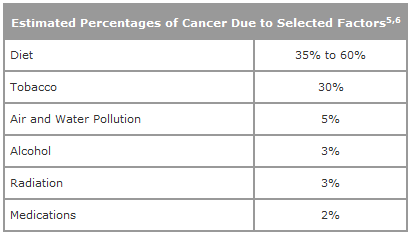
Eighty percent of cancers are due to factors that have been identified and can potentially be controlled, according to the National Cancer Institute. And not only can we potentially prevent most cancers, we can also improve the survival rates of people who have cancer. Cancers of the breast, prostate, and colon have received more research attention than other forms of the disease, but, as we will see, certain principles apply to many forms of cancer.
Cancer starts when one cell begins to multiply out of control. It begins to expand into a lump that can invade healthy tissues and spread to other parts of the body. But there is a lot we can do about it. Thirty percent of cancers are caused by tobacco. Lung cancer is the most obvious example, but by no means the only one. Cancers of the mouth, throat, kidney, and bladder are also caused by tobacco.
Dietary factors also play a significant role in cancer risk. At least one-third of annual cancer deaths in the U.S. are due to dietary factors. A recent review on diet and cancer estimates that up to 80 percent of cancers of the large bowel, breast, and prostate are due to dietary factors.
In 2008, excess body weight was responsible for over 124,000 new cancer diagnoses in Europe. These results were presented at a major European cancer conference in 2009 and showed endometrial (uterine) cancer, postmenopausal breast cancer, and colorectal cancer were the most common weight-related cancers. These three cancer types accounted for 65 percent of all cancers due to excess body weight. The effects of obesity also appear to increase mortality from several other types of cancer including gallbladder, pancreas, kidney, cervix, and ovary, as well as non-Hodgkin’s lymphoma in women with the highest BMIs compared to those with a healthy BMI. Previous studies including the Adventist Health Study-2 show that following a vegan diet results in the lowest BMI of any group (lacto-ovo-vegetarian, pesco-vegetarian, semivegetarian, nonvegetarian), making them less susceptible to obesity-related cancers.
The link between diet and cancer is not new. In January 1892, Scientific American printed the observation that "cancer is most frequent among those branches of the human race where carnivorous habits prevail." Numerous research studies have shown that cancer is much more common in populations consuming diets rich in fatty foods, particularly meat, and much less common in countries eating diets rich in grains, vegetables, and fruits. One reason is that foods affect the action of hormones in the body. They also affect the strength of the immune system and other factors. While fruits and vegetables contain a variety of vitamins, minerals, antioxidants, and phytochemicals to protect the body, by contrast, recent research shows that animal products contain potentially carcinogenic compounds which may contribute to increased cancer risk.
In addition to tobacco use and diet, other factors, including physical activity, reproductive and sexual behavior, bacterial and viral infections, and exposure to radiation and chemicals, may also contribute to the risk of certain forms of cancer.
|
  |